What Is PII? A Human Guide to Personally Identifiable Information
By PDFized Team·Published on ·Updated on ·8 min read
PII (personally identifiable information) is any detail that can identify a specific person, on its own or combined with other data – a name, address, date of birth, ID number, email, or similar.
If you are reading this article, it means you've probably already seen how personally identifiable information is usually explained to people.
Most guides on the Internet are too complicated and seem like they were written by lawyers, using very specific terminology. This is hard to understand if you are not a professional in this field. The overload of text makes reading about PII very difficult, because even after you finish, you still don’t really understand what actually counts as personally identifiable information in real life. Our human guide has a different goal.
What Does PII Mean?
PII stands for Personally Identifiable Information. In other words, it's any data that can identify a specific person, either directly or indirectly. PII is information that can help someone understand who a real person is.
Sometimes it's very obvious. Sometimes it's not that easy. Very often, information that reveals a person's identity can be found in places you don't even think about.
This is because PII isn't just about Social Security numbers, ID cards, or passports. It's about any data that can reveal your identity, even small details that don't seem important at first glance.
We want to explain what PII is in another way. We wrote it for people who aren't familiar with specific legal terminology, but who often work with documents, PDF files, contracts, invoices, medical records, screenshots, client documents, and other similar files on an everyday basis.
You will understand what PII is even if you are not a compliance officer and not part of a legal team in a big corporation.
So if you want to know what exactly counts as PII, what files are considered to contain this type of information, and how PII relates to you personally, you are reading the right material. In our article, we will break it down for you clearly and without too many legal terms.
What Is Direct and Indirect PII?
This is a very important part, because not all personally identifiable information looks the same. There are important distinctions between different types of PII.
The two main categories you should know about are direct identifiers and indirect identifiers.
Direct identifiers
Direct identifiers identify a person immediately, without any extra context or additional data.
The examples of direct identifiers include full names, passport numbers, Social Security numbers, ID numbers, driver’s license numbers, email addresses, phone numbers, and so on. If you see any of this information in a file, it means that this is definitely PII. You don’t have to analyze it, because this is exactly what personal data looks like.
Indirect identifiers
Indirect identifiers don’t point directly to a person, but when they are combined with other data, it’s possible that they will reveal someone’s identity.
Examples include dates of birth, ZIP codes, IP addresses, job titles, company names, device IDs, locations, browser fingerprints, and so on. A combination of such indirect identifiers can easily lead to a data leak.
How powerful are these combinations? Research found that 87% of US citizens can be identified from just three indirect identifiers: gender, ZIP code, and date of birth. No name needed.
Got PII in your documents?
PDFized detects and permanently removes personal information for you – free.
Is a Name Considered PII?
Usually, names are considered personally identifiable information, but sometimes it depends on context. Let’s compare two different situations.
For example, Susan Smith mentioned in a random post on social media without any extra details will not point to a specific person, because there can be many people with the same name.
But Susan Smith, who is a lead accountant at a certain corporation, was born in 1985, and has a specific email address, will definitely point to an exact person. In this case, this information will be considered PII.
So context can turn almost any data into personal information. If, for example, a name appears together with a location, a date, contact information, a job title, a company name, and so on, it means that you need to be careful with these details if you don’t want to identify a real person.
Common Examples of PII
PII is very widespread, because it’s not something you can only see in specific closed databases. We deal with PII every day, especially if you’re someone who works with documents, contracts, or any other files that contain information about clients or subcontractors. Here are some common categories of PII.
1. PDFs and scanned documents
PDFs are one of the most common PII carriers, because most files are shared in this convenient format.
For example:
- contracts
- invoices
- legal agreements
- insurance documents
- passport scans
- tax returns
- bank statements.
Such files often include names, addresses, signatures, account numbers, ID numbers, dates, and sometimes even hidden metadata that can also reveal someone’s identity. Even scanned PDFs can contain text with personal details that’s very easy to extract.
2. Forms and applications
If someone fills out a form and enters information about themselves, it will most likely contain PII.
For example:
- job applications
- rental agreements
- loan forms
- registration forms
- onboarding documents.
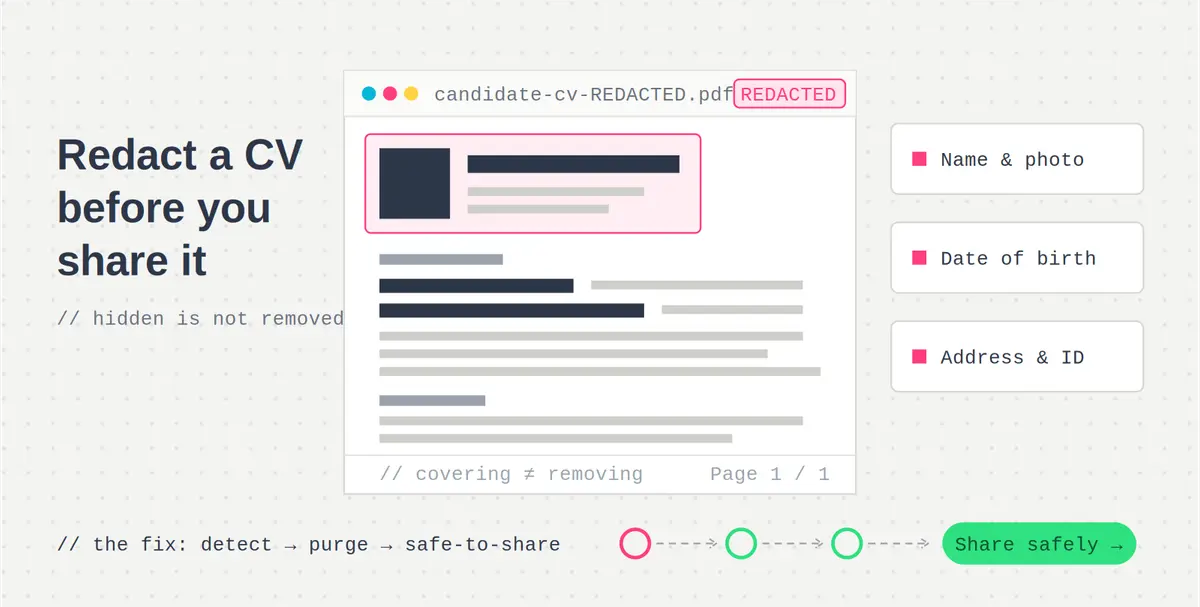
This type of documentation usually includes multiple identifiers at once – which is why redacting a CV before sharing it matters more than most people think. A redacted resume shows what the result looks like.
3. Medical and educational records
Medical and educational records contain a lot of PII, and most of it is very sensitive.
For example, diagnoses, medical history, confidential medical details, test results, student IDs, grades, exam results, and so on. This type of data is usually protected by strict laws and specific regulations. If such data is disclosed, it can lead to serious consequences for all parties involved in the process.
The Difference Between Sensitive and Non-Sensitive PII
Not all personally identifiable information carries the same level of risk. To understand this difference, it’s important to distinguish these categories very clearly. Otherwise, it will be difficult to prioritize which data must be protected first.
Non-sensitive PII
Non-sensitive PII is information that can identify someone, but usually doesn’t cause serious harm on its own. For example, a name, email address, phone number, job title, and similar data are still personally identifiable information, but they carry lower risks compared to other categories of data.
Sensitive PII
Sensitive PII is data that, if leaked, can lead to serious consequences.
Examples include:
- Social Security numbers
- Passport numbers
- Biometric data
- Credit card numbers
- Bank account details
- Medical records
- Educational records.
If sensitive PII is exposed, the consequences can include identity theft, financial fraud, legal problems, reputational damage, and long-term personal harm. That’s why sensitive types of PII deserve extra attention from anyone involved in handling such data.
Context can also move data between these categories. A name alone is non-sensitive – but the same name on a list of patients at a specific clinic becomes sensitive, because the list itself reveals private information about everyone on it.
Is an Email Address PII?
Yes, in most cases, email addresses are considered PII. Even a simple email address can identify a person, especially if it contains a name, surname, birth date, or other identifying details.
Work email addresses are among the most identifiable ones, because they usually include a real name, the name of the company, and a person’s role. That’s why corporate emails are often used as unique identifiers in security systems, and many privacy regulations treat email addresses as PII.
Are IP Addresses Considered PII?
This often surprises people. Under regulations like GDPR, IP addresses are considered personal data because they can be linked to a specific user.
They can reveal approximate location and, when combined with other types of data, such as an email address or metadata, they can help identify a person. Even if you don't know who the person is immediately, identification is still possible.
So yes, IP addresses can be personally identifiable information.
Why PII Is Important
Even if you are not working with governmental documents, not a lawyer, and not a medical worker, you should still care about PII.
From time to time, you deal with banks, collect documents, store them, share files in PDF and other formats, work with client data, visit different websites, and fill out online forms and applications.
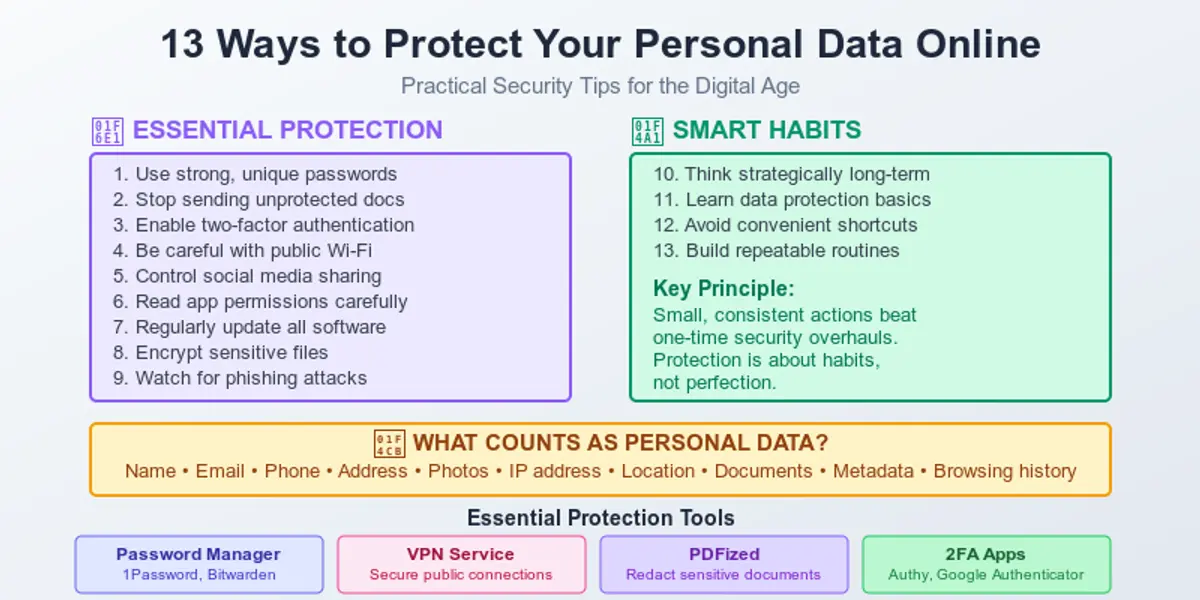
This means that you handle PII anyway, whether you realize it or not. Because of that, you need to be responsible. Awareness is the key to safety. Most privacy issues don’t happen because people are careless, but because they don’t realize they are dealing with personal data. PII is one part of a larger framework – learn broader sensitive data protection strategies to safeguard information beyond documents.
PII and Privacy Laws
There are different regulations that define what is considered PII, and they apply to different industries and regions. However, the core idea is the same everywhere. The main goal of these laws is to protect personal data.
Some of the most well-known regulations include GDPR. These laws apply in the European Union. They are very strict and can apply even if you are not located in the EU but handle data of EU users. GDPR covers a wide range of personal data, including passport numbers, email addresses, and many other identifiers. It also gives people the right to request a copy of their data, which is why companies use redaction software for secure DSAR delivery to remove third-party details before the file goes out.
Note that GDPR doesn't actually use the term "PII" – its legal term is "personal data," which is even broader and covers things like political opinions and physical descriptions. In practice, if you treat "personal data" and "PII" as the same thing and protect both, you're on the safe side.
CCPA/CPRA are regulations that apply to companies and individuals based in California. They are mostly focused on consumer rights. Transparency and control over personal data are among the main goals of these regulations.
HIPAA is a specific set of regulations that applies to the healthcare industry in the United States. Medical information, patient records, and test results are strongly protected under HIPAA, and these rules are considered extremely strict.
You don’t need to remember all legal nuances to understand how to protect PII. You just need to be aware that this type of data is regulated in every country, and if you ignore it, you can get into serious trouble.
How serious? Amazon was fined $888 million for a single GDPR violation in 2021 – and while small businesses face smaller numbers, the fines are real at every scale.
PII in PDFs
Here is something many people don’t realize. PDFs seem very safe, but that’s not exactly true. They feel static, but in reality, they often contain hidden metadata, embedded text, scanned personal information, digital signatures, and other sensitive elements.
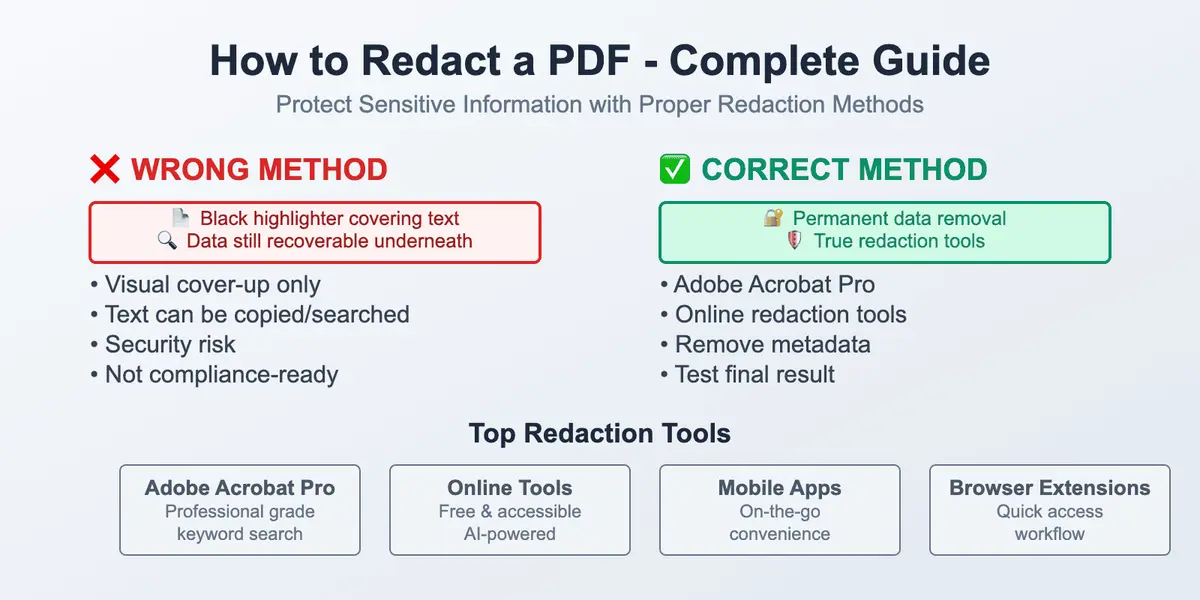
Sharing a PDF without proper redaction can unintentionally expose PII. That's why such files should be handled carefully and secured before sharing. Proper redaction ensures sensitive data is permanently removed, including hidden metadata, so it cannot be recovered or extracted later. For detailed steps and practical guidelines, check out our rules for redacting documents to avoid common mistakes.
What Is Not Considered PII?
It’s also important to understand what is usually not considered PII. In most cases, the following data is not PII on its own:
- a company name, if no person is attached to it
- general statistics that are publicly available
- anonymous survey results
- aggregated data
- random IDs that are not linked to specific individuals.
At the same time, you always need to remember that context matters. The same data can become PII depending on how it is used and combined with other information.
How PII Is Exposed in Real Life
In real life, PII is often exposed not because someone intentionally tries to hack a system or leak data. The most common reason is the human factor. For example:
- sending the wrong PDF to the wrong email address
- uploading sensitive files to unsecured tools
- forgetting to redact documents
- weak access control and data management
- storing files that are no longer necessary.
These mistakes happen every day and can lead to very serious consequences.
How to Handle PII Securely
You don’t need to be perfect. You just need to be systematic and consistent when developing habits that protect your data.
1. Collect only the data you need
If you don’t need to know someone’s birthday, don’t ask for it. If you don’t need a person’s ID number, don’t collect it. The less data you have, the lower the risks you deal with.
2. Secure your files
All documents you work with should be handled securely and with limited access. Avoid sharing sensitive files publicly through open links. It’s also important to use trusted tools.
3. Redact before sharing
Before sharing a file, remove IDs, addresses, account numbers, signatures, and other sensitive details. PII redaction software helps ensure this information is permanently removed rather than simply hidden, reducing the risk of accidental disclosure.
4. Delete when you're done
Keeping PII forever is not a good idea. It increases long-term risks. If you no longer need the data, it’s better to delete it and let it go.
Conclusion
PII is information that can identify a real person. That’s why it deserves respect and protection. You don’t need to be a government worker or a privacy expert to handle personally identifiable information thoughtfully. What really matters is awareness: understanding what is considered PII and knowing how to redact documents properly.
Correct handling of personally identifiable information is not really about rules, laws, or compliance checklists. It’s about people. About real names and real lives, and about the harm that can happen when this data is exposed.
That’s why the basic standard for everyone should be simple: handle other people’s data the same way you would want your own data to be handled.
// faq
FAQ
No, not really. PII also includes less obvious data. For example, IP addresses, location data, or combinations of details that can identify an individual. It's much broader than people usually think.
When searching for PII, you look for anything that can point to a specific identifier of a person – directly or indirectly. Even a combination of certain small details can become PII, so context matters more than it seems.
No, it doesn't. Actually anyone handling client data, contracts, or personal info deals with PII. Even freelancers or small businesses are responsible for protecting it from leaks and misuse.
It can lead to data leaks or legal issues. Once personal data is exposed, it's very hard to take control back. That's why careful PII handling matters.
Use proper redaction tools, limit access, and avoid sharing raw files. However, the key is making sure the data is fully removed after redaction, not just visually hidden.