All You Have to Know About a DSAR
By PDFized Team·Published on ·8 min read
A DSAR is known as a data subject access request. Basically, this formal request comes from an individual, who asks an organization to disclose what personal data it holds about them, in what way it uses that data, and where it goes. GDPR states that you have one month to respond. CCPA gives 45 days. If the deadline is missed, the request will turn into a complaint, an investigation, or a fine.
This guide covers what a DSAR must include, the exact deadlines under each law, how to respond step by step, and the part most teams underestimate – removing other people's data before the file goes out.
More About DSAR
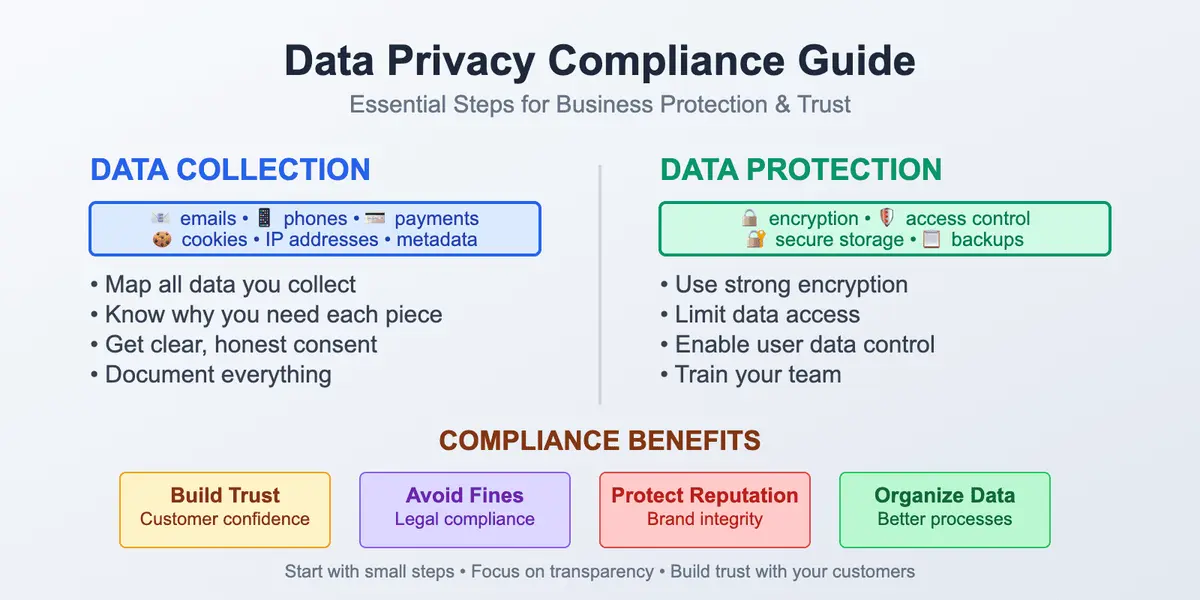
Simply put, it's a data subject access request. You'll also see it written as a DSAR request, or simply a subject access request (SAR) in the UK. In any case, the meaning remains the same. The "data subject" is the person the data is about – a customer, employee, job applicant, or website visitor. The right comes from Article 15 of the GDPR in the EU, the UK GDPR, and the CCPA/CPRA in California, with similar rights now written into most US state privacy laws, Canada's PIPEDA, and Brazil's LGPD. Access requests are one piece of a bigger obligation set – our data privacy compliance guide maps how they fit alongside the rest.
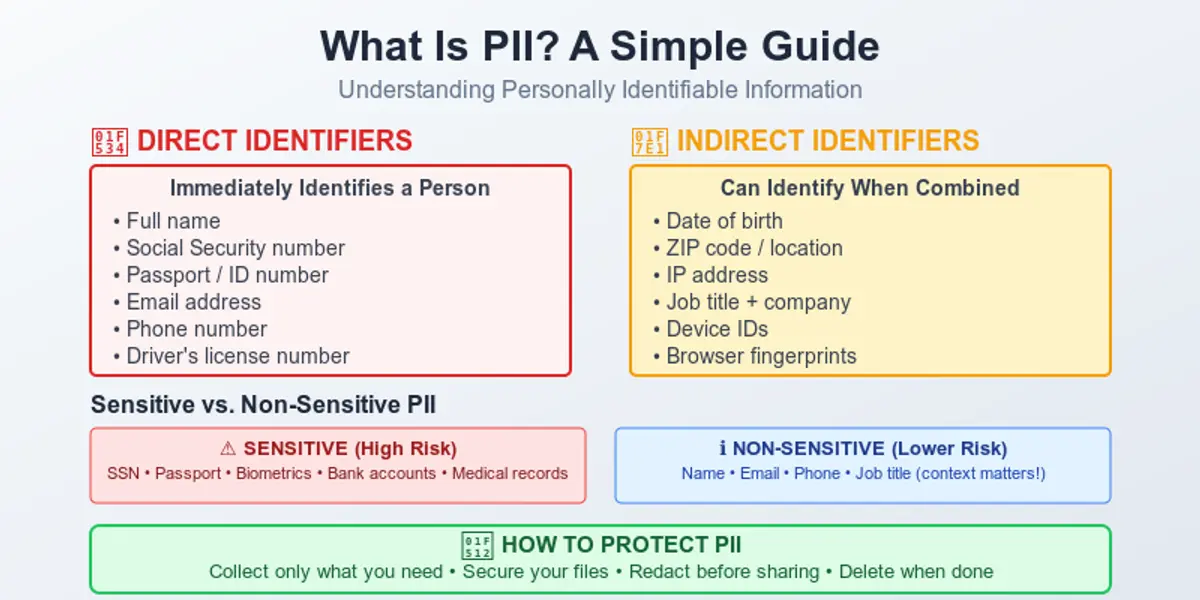
The scope is wider than people expect. A DSAR doesn't just cover the account record in your CRM. It reaches emails that mention the requester, support tickets, call recordings, HR files, Slack messages, access logs, and backup archives – anything that identifies them, directly or indirectly. If you're unsure what counts as personal data, start with our guide to what is PII.
Who Can Submit a DSAR?
Any individual whose data you process can submit one – and they don't need a reason, a lawyer, or a special form. A request made verbally, by email, or through a social media message is still valid under GDPR. Common requesters include:
- Employees and ex-employees, often during a dispute or before a tribunal claim
- Customers checking what a company knows about them or preparing a complaint
- Job applicants who suspect discrimination in hiring
- Authorized agents acting on someone's behalf (explicitly allowed under CCPA)
You can – and should – verify the requester's identity before releasing anything. Sending someone's file to an impersonator is itself a data breach. But verification must be proportionate: you can't demand a notarized passport copy for a newsletter subscription.
DSAR Response Deadlines: GDPR vs. CCPA
The clock starts when the request arrives, not when it reaches the right department.
| GDPR / UK GDPR | CCPA / CPRA |
|---|---|
| Standard deadline | 1 month |
| Extension | +2 months for complex or numerous requests |
| Must notify of extension | Yes, within the first month, with reasons |
| Fee | Free (fee only for manifestly unfounded or excessive requests) |
| Lookback window | All data currently held |
Two practical notes. First, the GDPR's "one month" means the same calendar date next month – a request received January 31 is due February 28. Second, an extension is not a pause: regulators expect you to acknowledge the request, explain the extension, and keep working.
If you operate across US states, the CCPA numbers are a good default: Virginia, Colorado, Connecticut, and most other state privacy laws also use a 45-day window with a 45-day extension. Building your DSAR process around the strictest law you're subject to – usually the GDPR's one month – keeps every other deadline covered automatically.
Preparing a DSAR response?
PDFized finds and permanently removes other people's personal data from the file – free.
What a DSAR Response Must Include
A compliant response is a copy of the data plus the story around it. Under GDPR Article 15, you must provide:
- A copy of the personal data itself – in a commonly used electronic format if the request came electronically
- The purposes you process it for
- The categories of data involved
- The recipients you've disclosed it to, including processors and international transfers
- The retention period, or the criteria you use to set one
- The source of the data, if you didn't collect it from the person directly
- Whether automated decision-making or profiling is involved, with meaningful logic explained
- Their other rights – rectification, erasure, restriction, and the right to complain to a regulator
The CCPA list is similar: categories collected, sources, business purposes, third parties data was shared or sold to, and the specific pieces of personal information.
Top Steps to Respond in DSAR Process
Step 1. One should log and acknowledge. Then you record the date received and send an acknowledgment stating the deadline. Train frontline teams to recognize requests: a DSAR buried in a support ticket still starts the clock.
Step 2. Do the verification of your identity. Match the requester to the data using information you already hold. For agents, confirm the authorization.
Step 3. Now, you search everything. Pull from structured systems (CRM, HR, billing) and unstructured ones (email, chat, shared drives, recordings). This is where most of the DSAR effort actually goes – and where most omissions happen.
Step 4. Apply exemptions. Not everything found goes out. Legal privilege, ongoing investigations, trade secrets, and – critically – other people's personal data can or must be withheld. Privileged material follows the same rules as any legal document redaction: withhold the protected content, note the basis. Document every exemption you rely on; regulators ask.
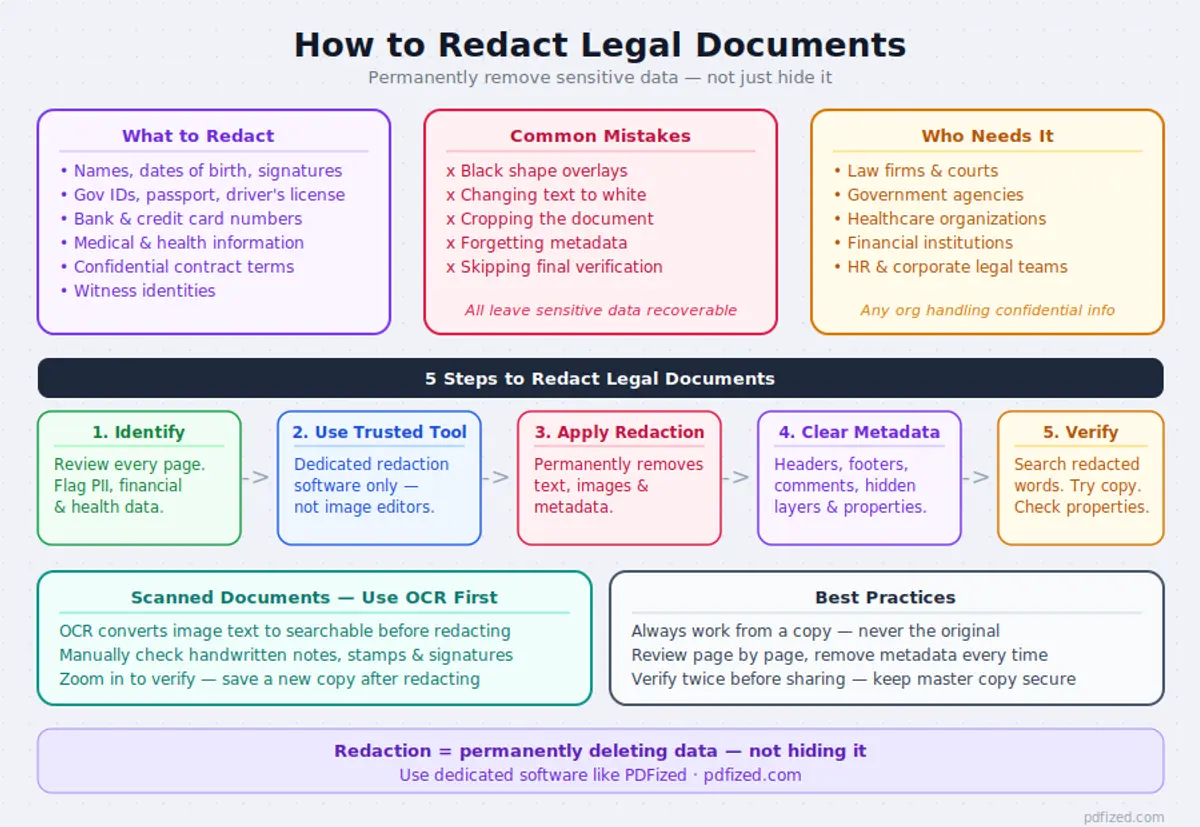
Step 5. Redact, then verify. Remove third-party data and exempt content from the documents themselves. This step has to be permanent: a cosmetic black box over live text can be copy-pasted away – the most common redaction failure we see in DSAR releases. It's also crucial to check hidden layers. A PDF can carry names in its properties and revision history long after the visible text is clean. For that reason, a step to remove metadata from a PDF belongs in the release checklist.
Step 6. Deliver securely and keep a record. Send through a secure channel, not a plain email attachment, and log what you disclosed, what you withheld, and why.
If you get more than a handful of requests a year, turn these steps into a documented DSAR workflow with named owners – regulators treat a repeatable process as evidence of compliance in itself.
The Hard Part: Other People's Data in the Requester's File
Here's the structural problem with DSARs. The requester has a right to their data – but almost every real document mixes their data with someone else's. An email thread names colleagues. A complaint file quotes witnesses. An HR investigation contains statements given in confidence. GDPR Article 15(4) is explicit: the right to a copy "shall not adversely affect the rights and freedoms of others."
So before anything is released, someone has to go through every page and remove the other names, emails, opinions, and identifiers – without touching the requester's own data. Done by hand across hundreds of pages, this is slow and error-prone, and a single missed name converts a compliance exercise into a reportable breach.
This is exactly the workload DSAR redaction software is built for: it detects personal identifiers across the document set, lets you keep the requester's data while permanently removing everyone else's, and produces files where the redactions can't be reversed – even in scanned PDFs.
In Case You Get a DSAR Wrong…
All the failures in DSAR compliance usually happen in the GDPR's upper fine tier. If violations of data subjects' rights happen, they can draw penalties up to €20 million or 4% of global annual turnover, whichever is higher. In practice, regulators fine at the lower end but publish the decisions – the reputational hit often outweighs the penalty. Under the CCPA, each violation carries up to $2,500 in civil penalties, or $7,500 if intentional, and California's enforcement sweeps have repeatedly targeted ignored consumer requests.
The quieter risk is litigation. DSARs are routinely used as pre-action discovery in employment disputes; a late or incomplete response hands the other side an easy procedural win.
// faq
FAQ
It's a person asking a company: show me everything you have on me, what you do with it, and who you give it to. The company is legally required to answer within a set deadline.
The standard DSAR response time is one month under GDPR and UK GDPR, extendable by two further months for complex requests. Under the CCPA, it's 45 days, extendable by another 45. The extension notice must go out within the original deadline.
Rarely. You can refuse manifestly unfounded or excessive requests, and you can withhold specific content under exemptions – legal privilege, third-party data, trade secrets. But each refusal must be explained in writing, and "it's a lot of work" is not a valid ground.
Yes. Emails that identify the requester – in the body, headers, or attachments – are personal data and fall within scope. Other people mentioned in the same emails must have their data redacted before disclosure.
Yes. UK practitioners usually say SAR. In the EU and US, you'll hear DSAR. Same right, same deadlines, same process.