NPPI: Meaning, Examples and GLBA Requirements
By PDFized Team·Published on ·8 min read
NPPI stands for nonpublic personal information: personally identifiable financial information that a consumer provides to a financial institution, that results from a transaction with them, or that the institution otherwise obtains, as defined by the Gramm-Leach-Bliley Act (GLBA). If your company touches this kind of data, GLBA tells you how to handle it, who you may share it with, and what safeguards you owe your customers.
Banks are the obvious case, but the definition covers mortgage brokers, insurers, tax preparers and many other businesses, and plenty of them handle NPPI every day without calling it that. This article explains what the term covers, where the line between public and nonpublic runs, and what to do when a document full of NPPI has to leave your hands.
What is NPPI?
The definition comes from the GLBA itself, in 15 U.S.C. § 6809(4). In plain terms, NPPI is personally identifiable financial information that is not publicly available and that a financial institution gets in one of three ways:
- The consumer provides it. Everything on a loan application, an account opening form, or an insurance questionnaire.
- It results from a transaction. Account balances, payment history, card purchases, wire transfers.
- The institution otherwise obtains it. A credit report pulled during underwriting, data from a service provider, notes from a collections call.
The statute adds one more piece that catches people off guard: any list or grouping of consumers built from nonpublic information is NPPI too. A marketing list of “our customers with balances over $50,000” is NPPI, even if the list itself shows only names and emails. The bare fact that someone is a customer of a particular institution counts as well.
What NPPI is not: publicly available information. If a detail is lawfully available from government records, widely distributed media, or disclosures required by law, it falls outside the definition. A phone number listed in a public directory is not NPPI. The same number written on a loan application is.
NPPI or NPI: Which Abbreviation Is Right?
Both are in use, which causes confusion. Regulators and lawyers shorten “nonpublic personal information” to NPI in most official guidance. The industry often writes NPPI to keep “personal” visible in the abbreviation. The two mean the same thing.
The shorter form has a drawback. In healthcare, NPI almost always means National Provider Identifier, the ten-digit number assigned to medical providers. Search for NPI and most of what comes back concerns that identifier, not financial privacy. That alone is a good reason to use NPPI in your internal policies: nobody misreads it.
NPPI vs PII: Not the Same Thing
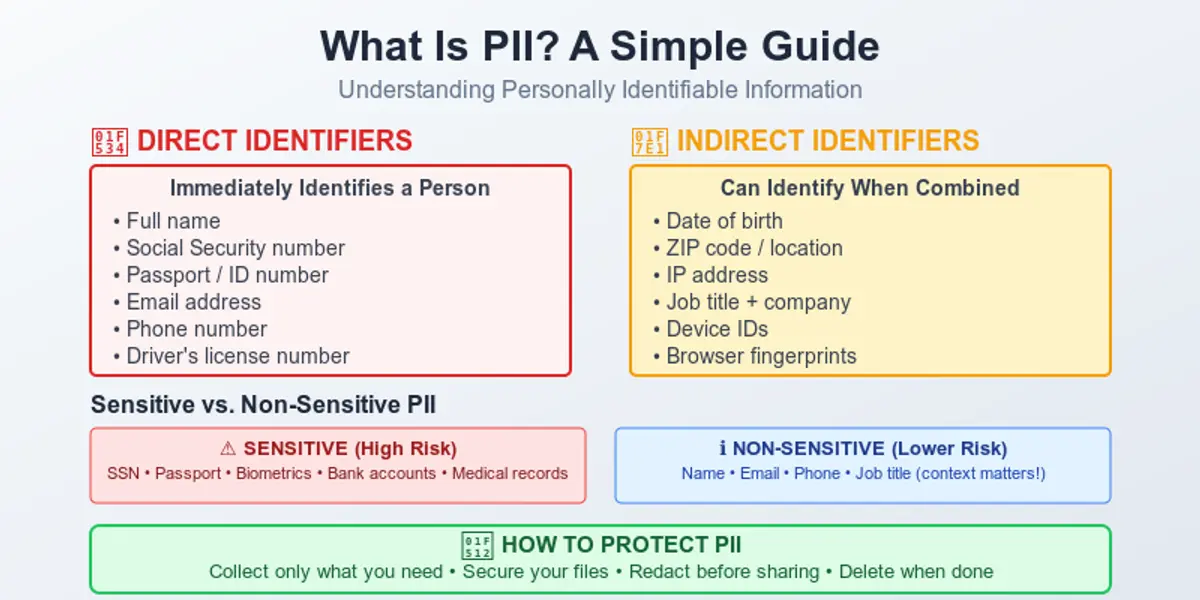
NPPI is often mixed up with PII. The two overlap, but they answer different questions.
| PII | NPPI |
|---|---|
| What it covers | Any data that can identify a person, in any context |
| Protected by | Depends on the context |
| Example | Name, address, date of birth, Social Security number |
| Relationship | Most PII is not NPPI |
A name on its own is PII. A name on a list of mortgage applicants is NPPI. Context does the work here. Once personal data connects to a consumer's relationship with a financial institution, GLBA applies, and with it comes a set of legal duties that general PII does not automatically carry.
Sharing a loan file or statement?
PDFized finds account numbers, SSNs and other NPPI and removes them permanently – free to start.
What Counts as NPPI: Examples From Real Documents
Here is what NPPI looks like in the files that actually cross your desk:
- Account numbers: bank accounts, credit cards, loan and policy numbers.
- Balances and transaction histories: what someone earns, owes, spends, and where.
- Social Security numbers collected for any financial product.
- Credit data: scores, reports, and anything derived from them.
- Application details: income, employer, assets, and debts listed on a loan or insurance application.
- Payment behavior: late payments, defaults, collection records.
- Customer lists: any grouping of consumers built from the data above.
- The customer relationship itself: the fact that a person banks, borrows, or holds a policy with you.
Documents packed with NPPI include loan files, bank statements, closing packages, insurance claims, tax documents, and billing records. If you have ever had to share one of those files with someone who did not need every detail in it, you have already handled the exact problem GLBA cares about.
Who Has to Protect NPPI
GLBA applies to “financial institutions”, and the FTC reads that term broadly: any company significantly engaged in financial activities. In practice the list runs well past banks:
- Mortgage lenders and brokers
- Insurance companies and agencies
- Payday lenders and finance companies
- Investment advisers and broker-dealers
- Tax preparers and accounting firms
- Debt collectors
- Real estate settlement services and title companies
- Auto dealers that arrange financing
- Colleges and universities that process federal student aid
Third parties that receive NPPI from a financial institution inherit obligations too. They cannot reuse or redisclose the data as they please. So “we’re not a bank” does not settle the question. If customer money moves through your business, assume GLBA has something to say about your files.
What GLBA Actually Requires
Two sets of rules carry most of the weight:
- The Privacy Rule. Institutions must give customers clear notice of what NPPI they collect, how they share it, and how to opt out of sharing with nonaffiliated third parties. The notice arrives when the relationship starts and at intervals after that.
- The Safeguards Rule. Institutions must run a written information security program that protects the confidentiality and integrity of customer information, in every form the records take: paper, electronic, or anything else.
“Every form” is the part worth dwelling on. A printed loan file in an unlocked cabinet is a GLBA problem just as much as an unencrypted database. A PDF emailed to the wrong recipient, or shared with the sensitive fields still readable, is a disclosure no matter how good the firewall was. Compliance programs tend to concentrate on systems and access controls, then leak through the simplest channel there is: a document somebody sent.
What Happens When NPPI Gets Exposed
GLBA enforcement comes from the FTC, the banking regulators, the SEC, and state authorities, depending on who you are. Penalties aside, an exposure means breach notifications, regulator attention to your safeguards program, and customers who now know their lender leaked their financials.
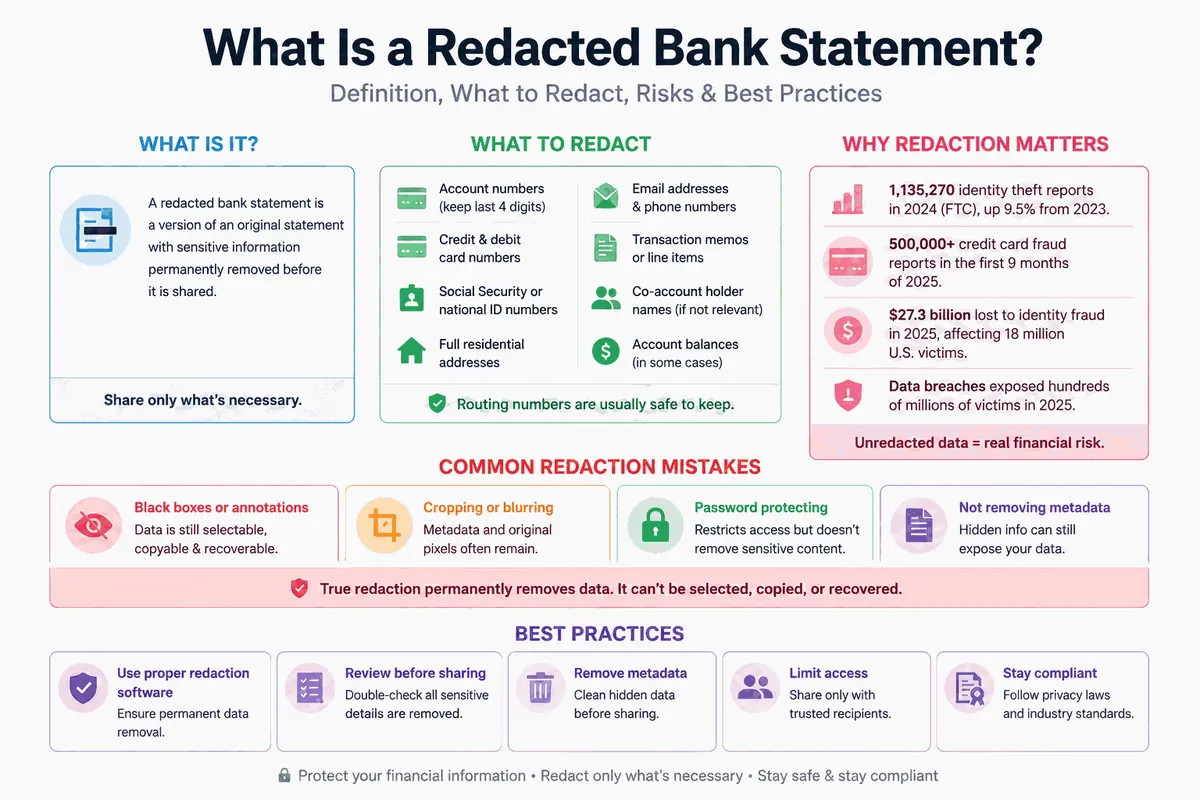
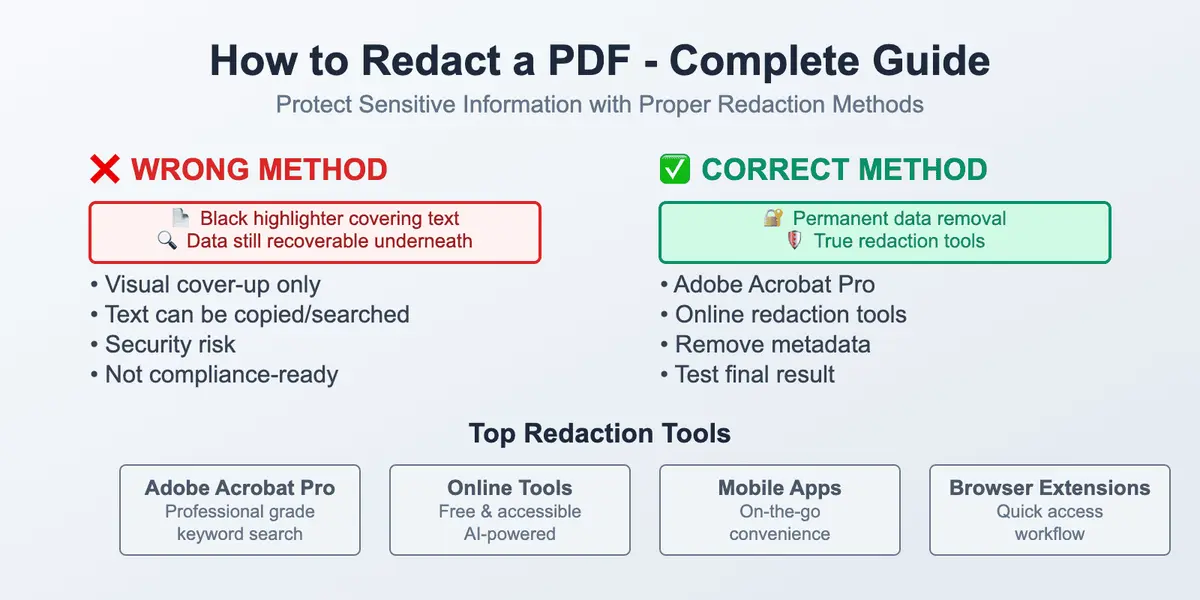
A fair share of exposures are quiet ones. A document goes out with a black rectangle drawn over an account number, and the text underneath is still there, one copy-paste away. We have covered what happens when redaction fails before, and NPPI cases follow the same pattern: the data was “hidden”, not removed, and somebody found it.
How to Redact NPPI From Documents
When a file has to go to opposing counsel, an auditor, a vendor, or a customer, remove what the recipient has no right to see. A workflow that survives scrutiny:
- Work on a copy. The original stays intact in your records.
- Find every instance. Account numbers repeat across pages, footers, and quoted email threads. Search the document instead of trusting your eyes.
- Remove the text, don’t cover it. True redaction deletes the underlying data. Drawing shapes over it leaves the NPPI in the file. Our guide on how to redact a PDF walks through the difference.
- Clean the metadata. Author names, file paths, and revision history can carry NPPI of their own. Remove the metadata before the file leaves.
- Verify. Search the finished copy for a redacted number. Try to copy text from under a bar. If anything comes back, start over.
For teams that do this at volume, financial redaction software can detect account numbers, SSNs, and other NPPI across a whole batch of documents and remove them permanently, which beats hunting for digits page by page.
Quick NPPI Checklist Before Sharing a File
- Account and card numbers, everywhere they appear
- SSNs and tax IDs
- Balances, income figures, and transaction details
- Credit scores and report excerpts
- Names of customers on any list or report
- The quoted history in email threads
- File metadata and the file name itself
// faq
FAQ
Nonpublic personal information: personally identifiable financial information held by a financial institution that is not publicly available. Regulatory texts often shorten the same term to NPI.
No. PII is any information that identifies a person. NPPI is the GLBA-regulated subset tied to financial products and services. All NPPI involves PII, but most PII is not NPPI.
Information a consumer provides to get a financial product, information resulting from transactions, information the institution otherwise obtains, and any consumer list derived from such data. Publicly available information is excluded.
GLBA duties do not expire when the relationship ends. The Safeguards Rule covers current and former customers alike, so a closed account’s records carry the same obligations as an active one, right up until the data is properly disposed of.
On its own, no. But a list of consumers built using nonpublic data stays NPPI even when the listed details are public, because the grouping itself reveals the customer relationship.